Concrete Services in San Antonio, TX
We handle anything to do with concrete in San Antonio and Austin: pouring it, stamping it, staining it, overlaying it, repairing it, and building with it. Below is every service we offer, what each one actually involves, what it typically costs, and how to look after it. If you are not sure which service fits your project, call (210) 739-9769 and describe what you have — we will tell you honestly which option makes sense, including when the honest answer is “repair it, don’t replace it.”
Resurface or replace? Start here
Not every worn slab needs tearing out. If the base is still sound — no major sinking, no deep structural cracks — an overlay or a repair can give you a new surface for less money and far less mess than a full replacement. If the slab has sunk, heaved, or broken apart, replacement is the honest call. We will look at your concrete and tell you which side of that line you are on, before you spend anything.
Stamped concrete
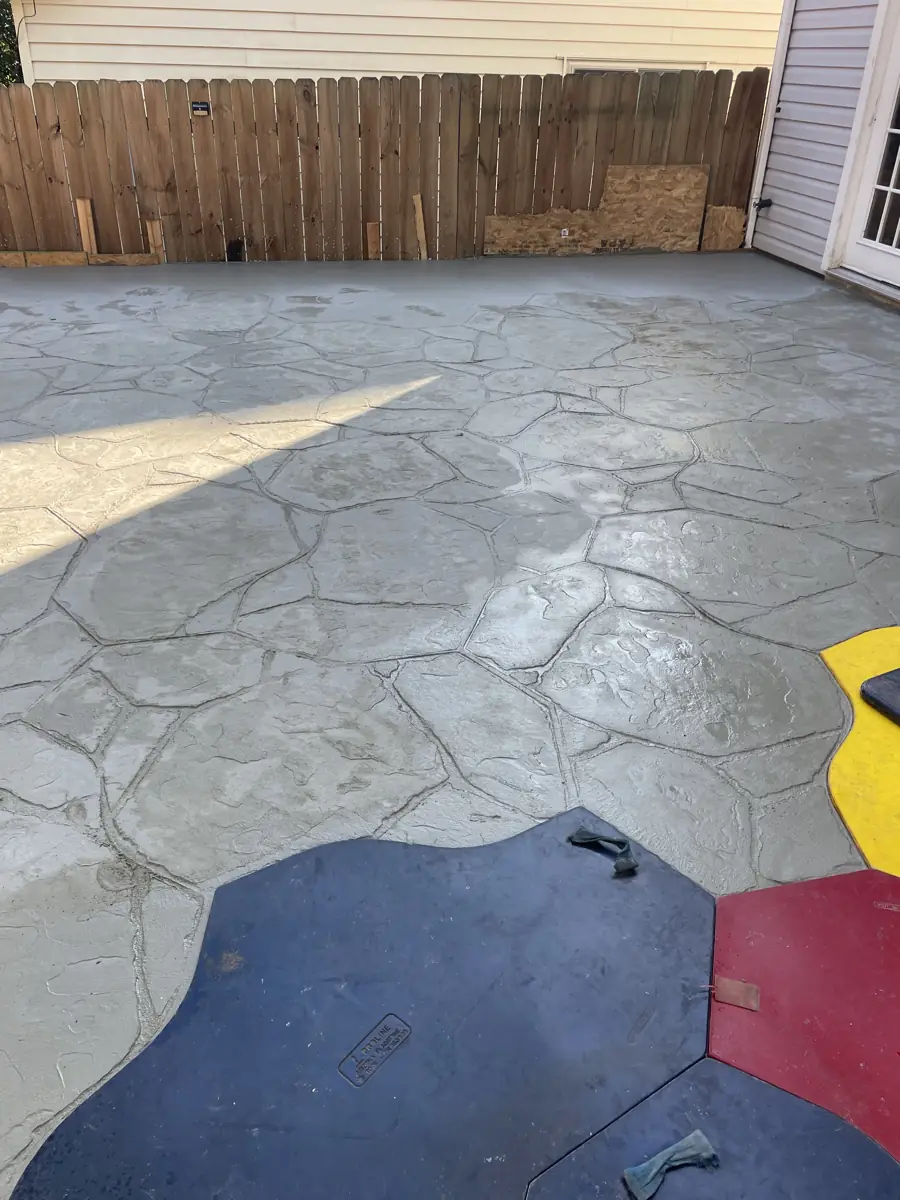
What it is: Patterns and colours pressed into fresh concrete so a patio, driveway, or walkway looks like stone, brick, slate, or wood.
The process: We prep and level the base, pour the slab, add colour, press the pattern mats, cut control joints, and seal it. Patterns range from ashlar slate and cobblestone to wood plank and brick.
Great fit for: Patios, driveways, walkways, pool decks, and porches where you want a high-end look without the price of real stone.
Cost: Typical San Antonio ranges run about $12 to $25 per square foot, depending on pattern, colour, size, and site access. Resealing every couple of years keeps the colour and the slip resistance up.
Maintenance: Sweep and wash normally; reseal on schedule; a non-slip grit can be added to the sealer for wet areas.
FAQs:
- Is stamped concrete slippery when it rains? It can be, like any smooth surface. We add non-slip grit to the sealer on areas that get wet, which keeps grip without changing the look.
- How does stamped concrete hold up to the South Texas sun? Colour and sealer are the defence. Quality colour holds, and resealing on schedule protects it from fading and wear.
- How does the cost compare to pavers? Stamped concrete usually costs less upfront than pavers and has no joints for weeds to grow through. The trade-off is the resealing cycle, which we put on the table plainly.
Stained concrete
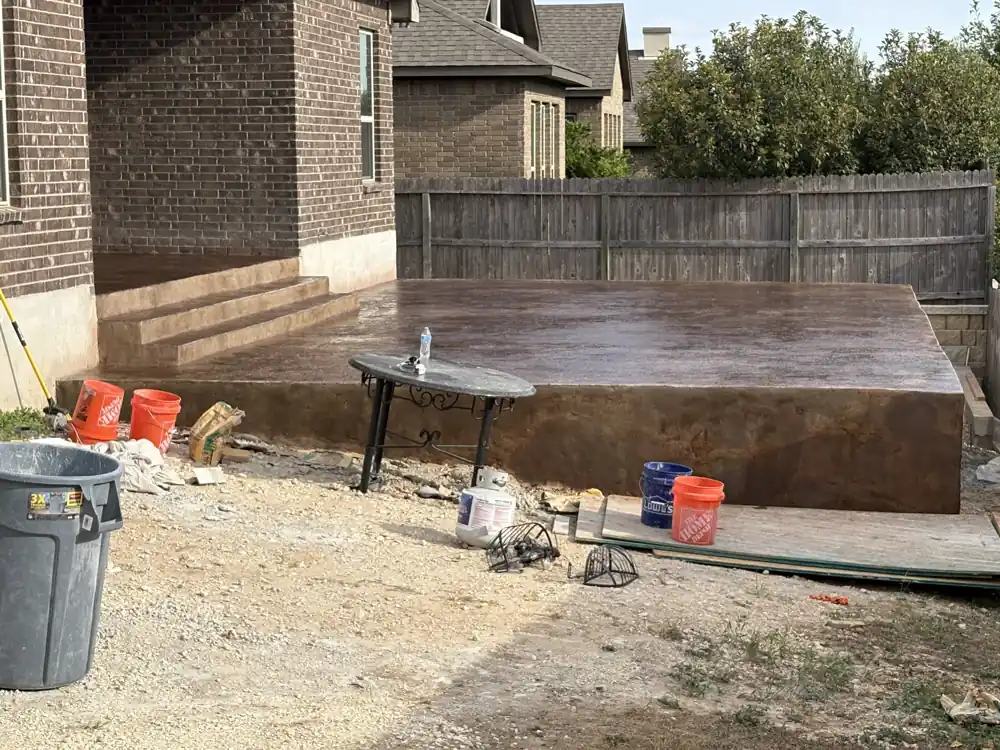
What it is: Permanent colour applied to concrete — not paint, not a coating sitting on top — that gives patios, floors, and pool decks a rich, variegated finish.
The process: We inspect the slab, prep it mechanically, repair cracks, apply the stain in layers for depth of colour, and seal it.
Great fit for: Patios, interior floors, pool decks, and any slab you want to look warm and finished rather than plain grey.
Cost: Typically in the same $12 to $25 per square foot band as stamped work, depending on slab condition and colour depth. Badly damaged slabs cost more because prep takes longer.
Maintenance: Reseal on schedule; clean with mild soap and water; avoid harsh chemicals on the finish.
FAQs:
- Is stained concrete just painted concrete? No. Stain reacts with the concrete itself, so the colour is in the slab, not sitting on it. That is why it does not peel the way paint does.
- Can you stain old concrete? Usually yes, if the slab is sound. Cracks get repaired first, and very patchy slabs may take colour unevenly — we will show you honestly what to expect.
Decorative concrete
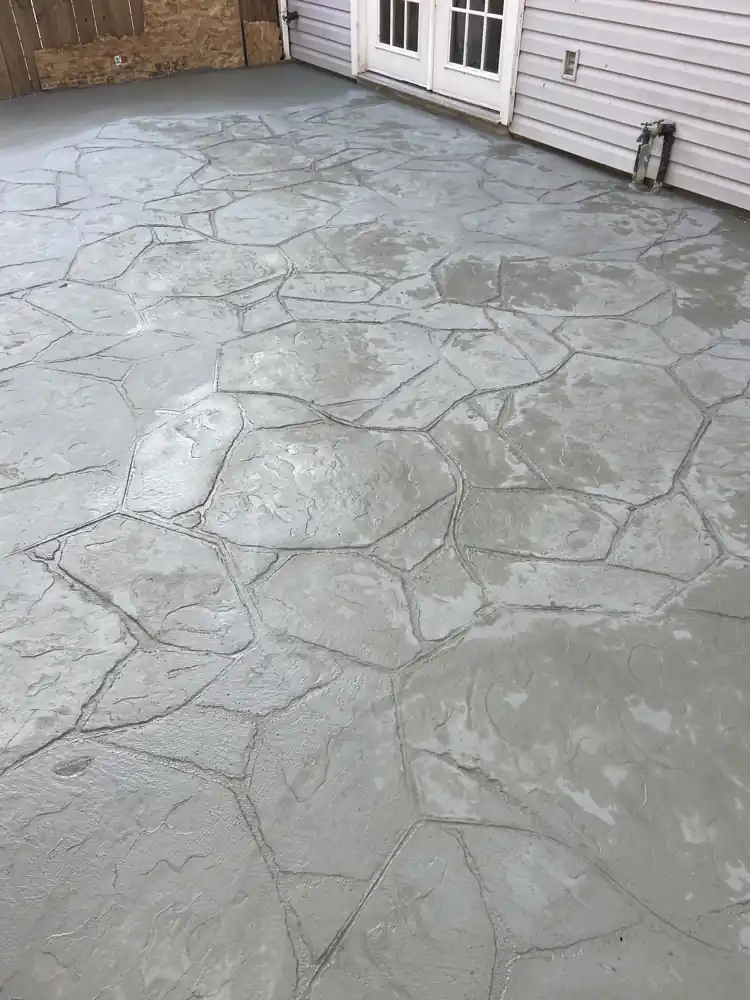
What it is: The umbrella term for finishes that make concrete beautiful: stamping, staining, overlays, exposed aggregate, and custom colour work.
The process: It depends on the finish you choose — see stamped, stained, and overlays above. The common thread is the same: prep the base properly, apply the finish, seal it, and maintain it.
Great fit for: Anywhere you want concrete to look deliberate rather than default — front entries, patios, pool surrounds, and commercial fronts.
Cost: Set by the finish, not the umbrella term. Basic decorative finishes start in the flatwork range; patterned and multi-colour work runs higher. See the stamped and stained sections for typical ranges.
FAQs:
- What is the difference between decorative and regular concrete? Regular concrete is poured and left grey. Decorative concrete gets a finish — pattern, colour, texture, or all three — so it looks designed, not just poured.
Concrete overlays
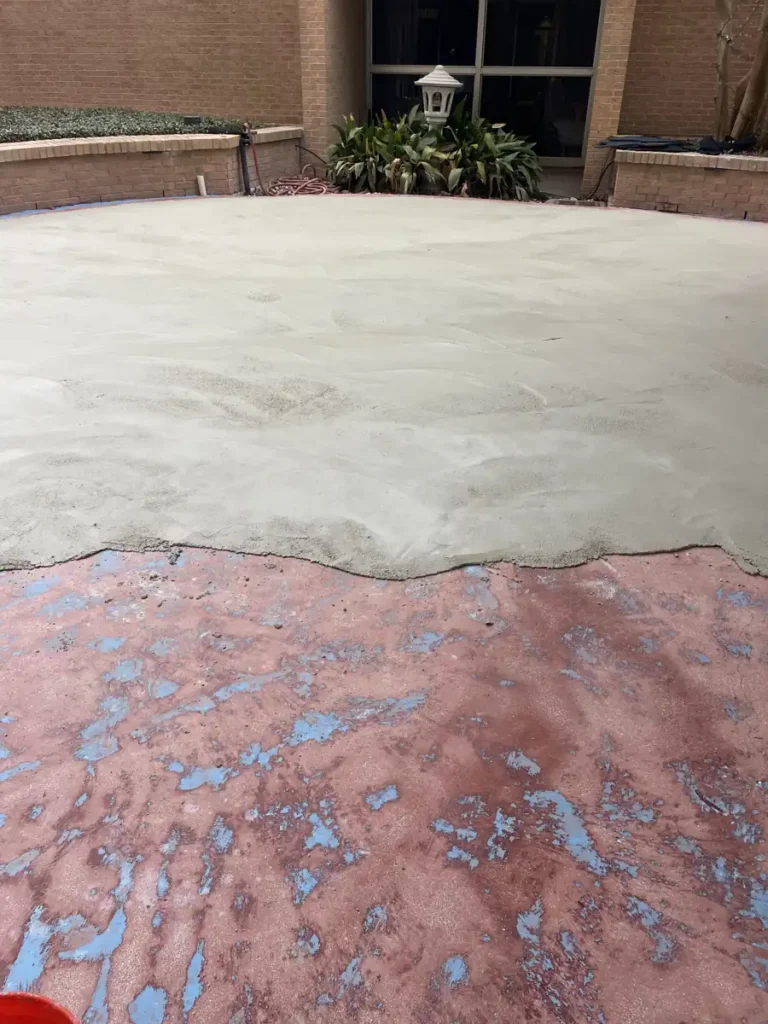
What it is: A new, thin concrete surface applied over your existing slab — a fresh finish without demolition.
The process: We inspect for structural soundness, repair cracks, prep the surface, apply the overlay system, add pattern or colour if wanted, and seal it.
Great fit for: Worn but sound patios, driveways, walkways, and pool decks where the base is fine and only the surface has had it.
Cost: Less than full replacement, because there is no tear-out and no new base. Exact cost depends on slab size, condition, and finish.
Maintenance: Same as the finish on top of it — reseal on schedule, clean normally, fix small cracks early.
FAQs:
- Can an overlay fix a cracked slab? It can fix surface cracks and wear. It cannot fix a slab that has sunk or broken structurally — that needs replacement, and we will tell you so.
- How long does an overlay last? With proper prep and sealing, an overlay lasts many years. The honest variable is the slab underneath: a sound base means a long-lived overlay.
Concrete repair
What it is: Crack repair, patching, levelling advice, and resurfacing that extends the life of concrete you already have.
The process: We find the cause first — settlement, water, tree roots, or just age — then repair the damage and, where possible, the cause. Cosmetic patching over an active problem is money wasted, so we do not do it.
Great fit for: Driveways, patios, sidewalks, and slabs with cracks, chips, uneven spots, or worn surfaces.
Cost: Repairs are priced by the job, not by the square foot, because a ten-foot crack and a sunken corner are different problems. Small repairs are the most affordable work we do; larger repairs approach overlay pricing.
Maintenance: After repair, keep water draining away from the slab and deal with new cracks early.
FAQs:
- Can cracked concrete be repaired without replacing it? Most of the time, yes — if the slab has not sunk or broken apart. Surface and control-joint cracks repair well. Structural failure does not, and we will say so plainly.
- How long does a repair last? A repair done on a stable slab lasts years. A repair on a slab that is still moving will crack again — which is why we check the cause before we patch.
Epoxy coatings
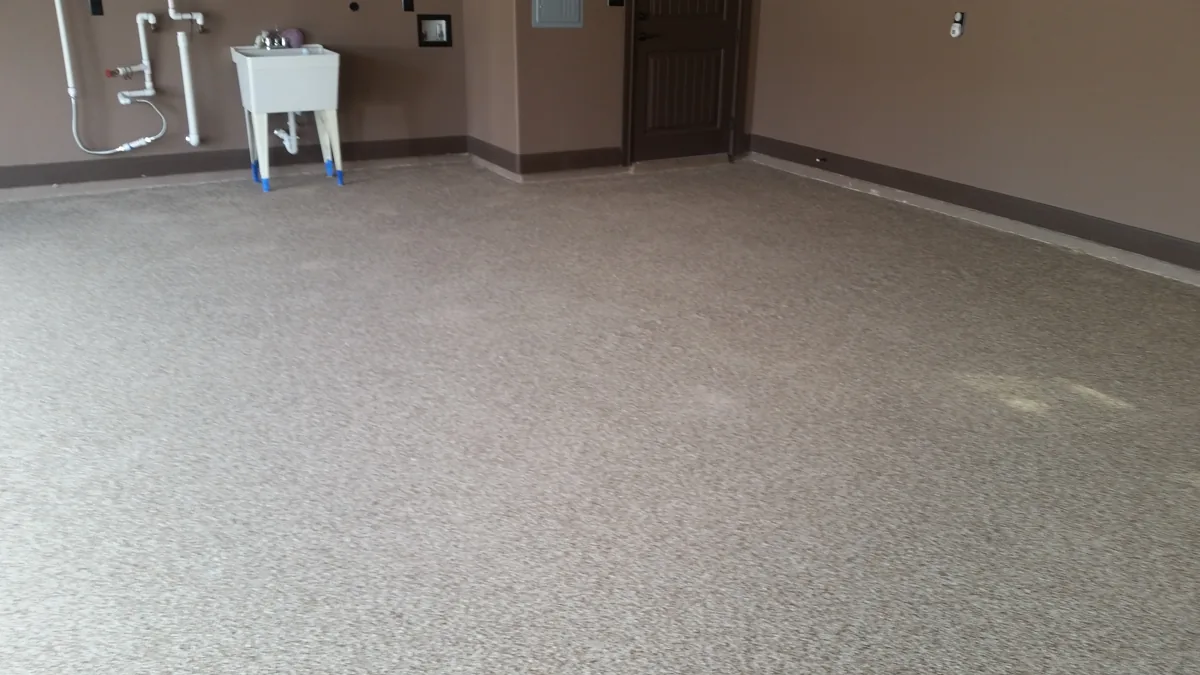
What it is: A tough, seamless resin coating for garage and workshop floors — chemical-resistant, easy to clean, and available in solid colours and decorative flakes.
The process: We grind or shot-blast the floor for grip, repair cracks, apply the epoxy system in coats, add flakes or colour if wanted, and finish with a clear topcoat.
Great fit for: Garages, workshops, utility rooms, and light commercial floors that take oil, tyres, and foot traffic.
Cost: Epoxy is usually priced per job rather than per square foot, because prep condition drives the price. A standard two-car garage is the most common job size.
Maintenance: Sweep and mop; avoid dragging sharp metal; recoat the topcoat when wear shows.
FAQs:
- Can I epoxy my garage floor myself? DIY kits exist, but they fail most often at prep: a floor that was not ground properly peels. Professional prep is most of what you are paying for.
- How long does epoxy last? A properly prepped and installed system lasts years under normal garage use. Hot-tyre pickup and peeling trace back to prep and product quality, not to the idea itself.
Outdoor kitchens
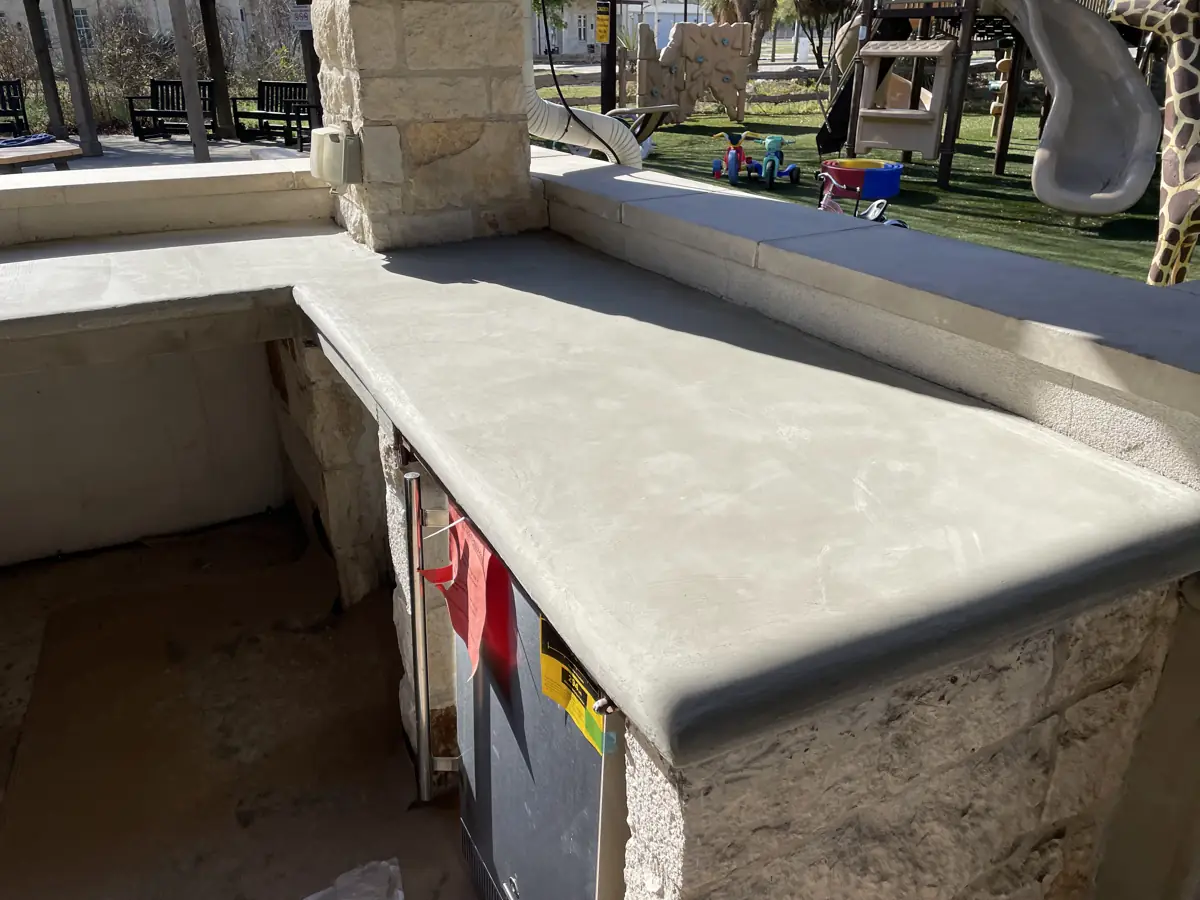
What it is: Concrete-built outdoor kitchens — concrete countertops, grill surrounds, storage, and bars — made to live outside in Texas weather.
The process: We plan the layout with you, build the concrete structure, finish it to match your patio, and set the appliances and surfaces.
Great fit for: Backyards where the patio is already the living room, and for anyone who grills more than they cook inside.
Cost: Priced per project — size, appliances, and finishes set the number. As part of a patio project, it costs less than building it separately later.
Maintenance: Seal the concrete surfaces on schedule; cover appliances in harsh weather; clean like any outdoor surface.
FAQs:
- Can an outdoor kitchen be added to an existing patio? Usually yes, if the patio slab is sound and level. We check the base before promising anything.
- Does concrete hold up outside in Texas heat? Yes — concrete is made for it. Sealing protects the finish from sun and rain, and we choose finishes that stay cooler underfoot where that matters.
Gazebos and trellises
What it is: Shade structures — gazebos for a covered seating spot, trellises and pergolas for filtered shade — that finish an outdoor living space.
The process: We set proper footings, build the structure, and tie it into your patio or landscape so it looks planned, not added on.
Great fit for: Patios, pool areas, and gardens where summer sun makes the space unusable without shade.
Cost: Priced per structure — size, materials, and footing work set the number.
Maintenance: Re-seal or re-stain wood elements on schedule; check footings and fasteners yearly.
FAQs:
- What is the difference between a trellis and a pergola? A trellis is a lighter, lattice-style structure, often against a wall or as a screen. A pergola is a freestanding, open-roofed structure with beams that give partial shade. People search for “pergola” most, so that is the word we use — but we build both.
Bathroom remodeling
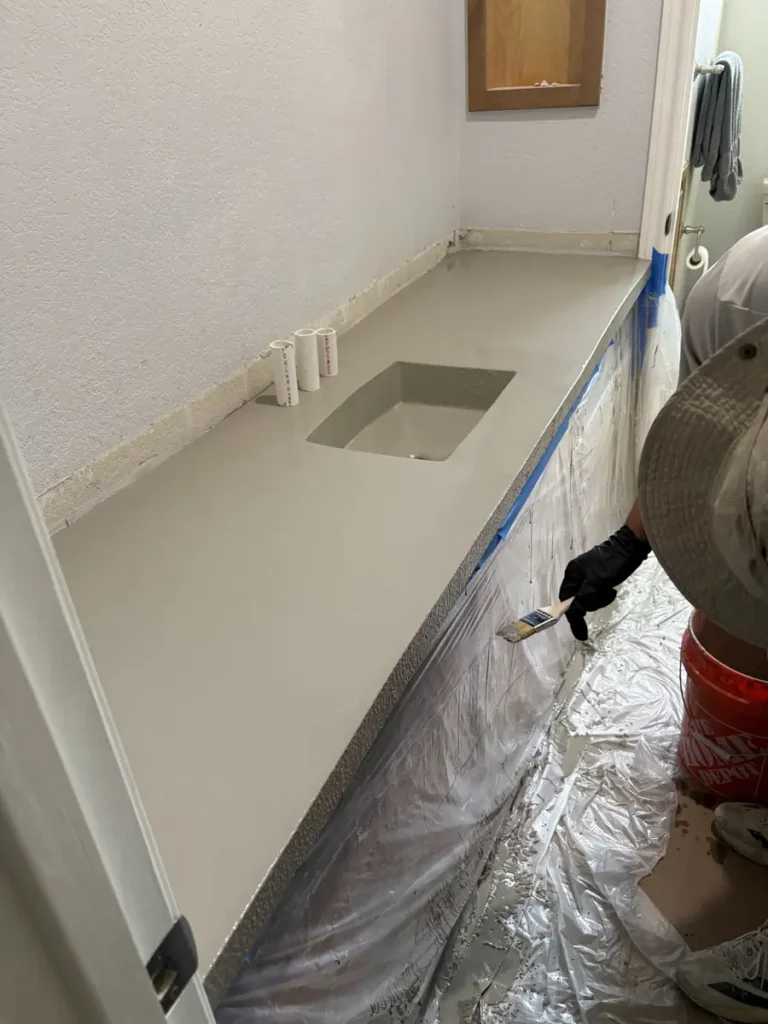
What it is: Bathrooms remodelled with concrete finishes — shower bases, stained and polished floors, and custom sinks and countertops — by a contractor who already knows concrete inside out.
The process, timelines, and cost factors are on the dedicated page. Bathroom Remodeling
Concrete foundations
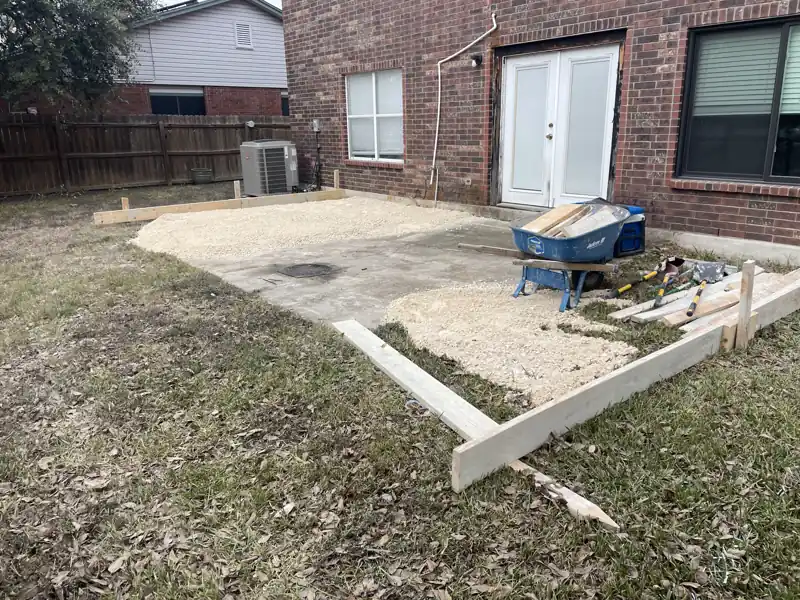
What it is: Slabs and foundations for residential and light commercial builds — the base everything else stands on.
The process: We set out the footprint, prep and compact the base, set reinforcement, pour, and cure to spec. Flatness, levels, and anchor-bolt positions are checked, not assumed.
Great fit for: New homes, additions, metal buildings, workshops, and light commercial slabs.
Cost: Priced per project — size, thickness, reinforcement, and site access set the number. Foundation quotes are always site-specific.
Maintenance: Keep water draining away from the slab edge; watch for new cracks after extreme dry or wet spells, which is when Texas clay soils move most.
FAQs:
- What causes foundation problems in San Antonio? Mostly the soil. San Antonio sits on expansive clay that swells when wet and shrinks when dry. Good base prep, drainage, and reinforcement are what keep a slab stable through those cycles.
- How long does a foundation take? A residential slab is typically days of work plus curing time before building on it. We give you a schedule before we pour.
Commercial and light industrial work
We also take on commercial flatwork — warehouses, workshops, and metal-building pads — where the same rules apply: spec, prep, pour, cure. If you are a general contractor or a business owner with a slab to pour, call (210) 739-9769 and tell us the spec. We will answer straight about whether it fits our schedule.
Not sure which service fits? That is normal. Call (210) 739-9769, describe what you have and what you want, and we will point you to the right option — including when the right option is a repair, not a replacement. Monday to Friday, 7am to 7pm.